
Working for the river: highlights from the LIFE Dee River Project’s land management officers

Having worked on the LIFE Dee River project as Land Management Officers for four years, we asked Ifor and Tom to summarise some of their highlights during the project, and share a snapshot of their day to day roles in helping to improve water quality, supporting sustainable land use, and strengthening habitats across the catchment.
In this blog, they reflect on the diverse range of schemes delivered on the ground - from farmyard infrastructure upgrades and forestry improvements to riverbank restoration and wider engagement with farmers and landowners. Their insights show how practical, collaborative action is helping to create a more resilient River Dee, and emphasise the importance of targeted interventions that support both environmental outcomes as well as the needs of agricultural businesses.
Ifor tells us about the agricultural and forestry work he was involved with…
Working as a Land Management Officer on the LIFE Dee River project gave me the chance to spend a lot of time out on the ground, working directly with farmers, foresters, and partner organisations across the Dee catchment. The role was varied and practical, combining site visits, problem-solving, and organising contractors to deliver the work on site.
Much of my time was spent identifying where small, targeted changes could make a real difference - whether that was improving farm infrastructure, reducing run-off into rivers, or upgrading forestry tracks to better manage water during heavy rainfall. It was a role that required flexibility, good communication, and an understanding of how environmental goals fit into day-to-day land management.
Farmyard Improvements
Over two winters, I managed several agricultural initiatives using £150,000 of additional Welsh Government funding to support farmyard improvements aimed at reducing unnecessary slurry production and run-off. My role involved identifying the most effective upgrades, carrying out site assessments, and working closely with farmers to develop solutions that worked for both the environment and the farm business.
Through discussions and on-site assessments, I identified key areas where clean rainwater was entering slurry systems unnecessarily. Measures such as guttering installation and rainwater harvesting were prioritised, with each solution tailored to the layout and needs of individual farms. I worked directly with landowners to agree designs and deliver improvements that were practical, affordable, and supported on the ground.
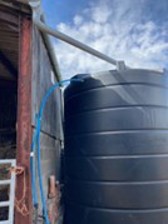
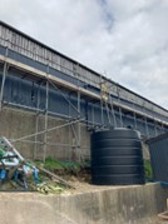
In total, around 1,500 metres of guttering was installed, helping to divert clean water away from slurry stores. These improvements reduced slurry volumes, lowered the risk of pollution incidents, and were generally well received by farmers. The work also directly supported compliance with the Water Resources (Control of Agricultural Pollution) (Wales) Regulations 2021, particularly around slurry storage capacity and clean and dirty water separation.
On some sites, rainwater harvesting tanks were also installed, allowing rainfall to be collected and reused around the farm. The work was delivered across a variety of different farm types, from beef farms in the upper catchment to more intensive dairy units downstream.
Farm visits, advice and landowner engagement
A key part of my role involved undertaking farm visits across the Dee catchment, with each visit tailored to the individual farmer and the specific issues on their land. These visits included identifying potential riverside corridor and buffer strip opportunities, providing grant advice and guidance, and offering clear, practical support around pollution prevention and agricultural regulations. We successfully targeted and visited over 110 farms during our time on the project.
During visits, I assessed farm layouts, infrastructure, and land management practices to identify where improvements could have the greatest impact. This included advising on slurry and yard run-off risks, clean and dirty water separation, and opportunities to reduce diffuse pollution entering watercourses. I also helped farmers better understand relevant regulations and how simple infrastructure changes could help them remain compliant.
Grant support was an important part of this engagement. I worked with farmers to identify suitable funding opportunities, explain eligibility, and discuss how proposed works could be designed to meet scheme requirements while still fitting into the realities of the farm. This helped turn conversations into practical, funded improvements on the ground.
While the focus of this work was always direct engagement with farmers, we also worked in collaboration with other organisations within the Dee catchment. This helped ensure a consistent, holistic approach and avoided duplication, while keeping farmer needs and site-specific solutions at the centre of what we were trying to achieve.
Forestry track and culvert improvements
As part of our wider land management work under the project, we also worked closely with NRW’s forestry teams to make improvements to 11 culverts along five miles of forestry track within the Aberhirnant and Llangower forestry blocks. This work involved the replacement of eight dysfunctional culverts and the installation of three new culverts, addressing long-standing issues with sediment run-off.
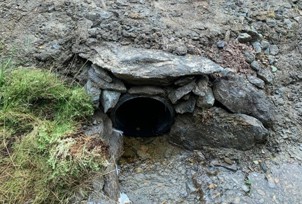
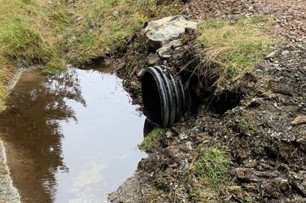
The upgraded culvert infrastructure significantly reduced the amount of sediment and other contaminants entering nearby watercourses, particularly during periods of flash flooding. By improving water conveyance and stabilising track drainage, the works not only delivered clear environmental benefits but also allowed ongoing forestry operations to continue in a more sustainable and efficient way.
As part of this work, sediment traps were installed along the culvert network. These provide a simple but effective way of capturing sediment by excavating shallow basins either above or below the culverts. This interrupts the flow of water just enough to allow heavier particles to settle out, while still allowing water to pass through the system.
The changes to drainage also created wet flushes and sumps to manage excess water more naturally. These areas will be built into future forest resource plans, with the removal of conifer species that are less suited to wetter conditions. In their place, native species such as willow and alder will be encouraged to establish, improving biodiversity and long-term resilience.
Tom shares some examples of his habitat restoration schemes and the installation of a new forestry crossing…
One of the habitat restoration schemes I worked on during the project involved restoring the riverbank using natural techniques such as willow revetments, along with fencing and tree planting to create a riverside corridor to help stabilise the erosion and improve water quality. The riverbank had been breaking down due to livestock access and high flows, contributing to sediment and nutrient input that were affecting the watercourse.
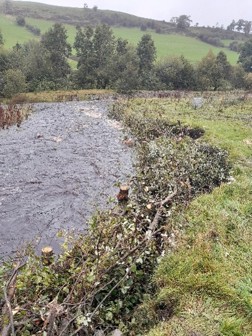
We installed living willow revetments along the toe of the bank, weaving fresh cuttings between stakes to create a natural structure that resists erosion and will root over time. This approach blends into the landscape and strengthens as the willow grows. To protect the restored bank, stockproof fencing was added to keep livestock out, reduce trampling, and prevent direct nutrient input into the watercourse, whilst allowing vegetation to recover naturally.
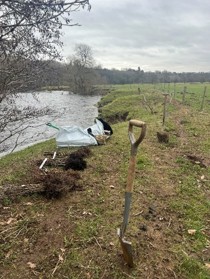
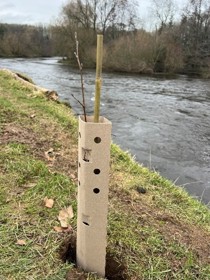
Tree planting along the upper bank added deeper, long term stability. The native tree species that we planted will help slow the run-off, provide shade, and create habitat that supports biodiversity. Early signs are positive; the willow is taking root, vegetation is returning behind the fencing, and the amount of sediment entering the river has already reduced.
This particular scheme is a great example of how simple, nature based methods can quickly improve riverbank stability and support cleaner, healthier watercourses.
Excluding stock from watercourses, cattle crossings, and tree planting
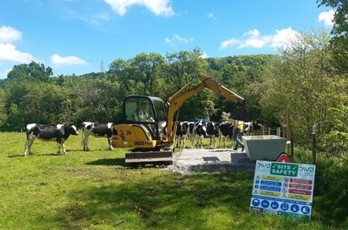
I delivered a landscape restoration project on a former beef farm transitioning into dairy production. The work here focused on protecting water quality, improving habitat, and preparing the holding for the increased pressures associated with a larger dairy herd. With around 150 cows expected to move through the system daily, the aim was to put strong preventative measures in place before production scaled up.
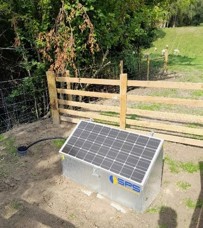
One of the most significant interventions was installing 2 kilometres of fencing to exclude cattle from entering the watercourses running through the farm. Previously, livestock had free access to the banks, which led to trampling, erosion, and direct nutrient input. By creating a continuous fenced buffer, the watercourses are now protected from poaching and contamination, allowing vegetation to recover naturally and creating a cleaner, more resilient riparian corridor.

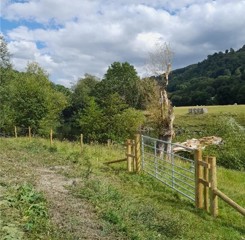
To support wider biodiversity and add long term structural stability, we planted 2,000 native trees along the fenced margins. These young trees will develop into a diverse riparian woodland over time, offering shade, shelter, habitat, and improved connectivity for wildlife. Their root systems will help strengthen the banks and slow surface run-off, reducing sediment movement into the water and contributing to healthier, more stable channels.
Another key part of the project was installing a purpose built cattle crossing. Without it, around 150 cows would have crossed directly through the watercourse each day, significantly increasing nutrient loading and disturbing the channel bed. The new crossing provides a controlled, hardstanding route that keeps livestock out of the water entirely. This simple intervention will have an immediate and lasting impact on reducing faecal contamination and protecting the watercourse from physical damage.
Together, these measures create a robust foundation for the farm’s transition into dairy production while safeguarding the surrounding environment. The combination of fencing, tree planting, and improved livestock infrastructure ensures that both the farm business and the local ecosystem can thrive side by side for years to come.
Building a new forestry crossing to improve water quality
As part of our work to improve water quality within the forestry, we carried out an important infrastructure project within the upper catchment of the Penaran forestry block - the construction of a new bridge designed specifically for forestry machinery and timber transportation. Before this project, the only way to cross the river was to drive directly through it via an existing ford. Although practical in the past, this method posed ongoing environmental risks, particularly as forestry activity in the area increases.
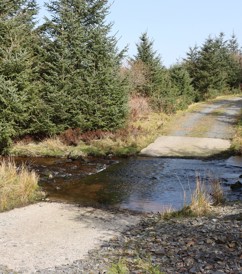
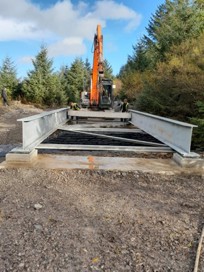
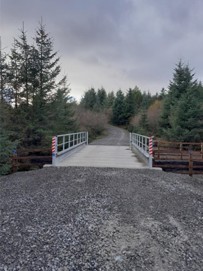
With the new bridge in place, heavy machinery and timber lorries no longer need to enter the watercourse. This change is significant - during harvesting and extraction, an estimated 2,000 passes of 44tonne articulated lorries would otherwise have travelled through the river. Over the next five years, approximately 25,000 tonnes of timber are expected to be transported across this route, meaning thousands of vehicle movements will now occur without disturbing the channel. Removing this pressure will greatly reduce sediment mobilisation, nutrient input, and the general wear on the riverbed.
Protecting the upper catchment is crucial for the wider River Dee system. Sediment and nutrient input from forestry operations can have cumulative impacts downstream, affecting water quality, instream habitats, and the species that depend on them. The bridge acts as a preventative measure, reducing both chronic impacts - such as fine sediment and organic matter entering the river - and the risk of acute contamination events linked to machinery.
Recent scientific findings have raised additional concerns about contaminants released from tyre wear. Research has shown that certain chemical compounds associated with tyre particles can have lethal effects on species such as Coho salmon. While the LIFE Dee River project focuses on Atlantic salmon, there is still uncertainty about how widespread these impacts might be across different salmonids and other aquatic organisms. By eliminating the need for heavy vehicles to pass directly through the river, the bridge helps remove this potential risk entirely, offering an extra layer of protection for vulnerable species.
Overall, the new bridge represents a proactive and forward thinking approach to catchment management. It supports sustainable forestry operations, protects water quality, and contributes to a healthier, more resilient river system. This relatively small piece of infrastructure will deliver long term environmental benefits while ensuring the forestry block can operate efficiently and responsibly for years to come.
The LIFE Dee River project is funded by the EU LIFE programme, Welsh Government, Environment Agency, Dŵr Cymru/Welsh Water, Eryri National Park Authority and the River Restoration Centre.
To keep up to date with our work you can follow us on Facebook and Instagram or subscribe to our newsletter here.